I came to this work the long way around. Which is probably why it fits so well.
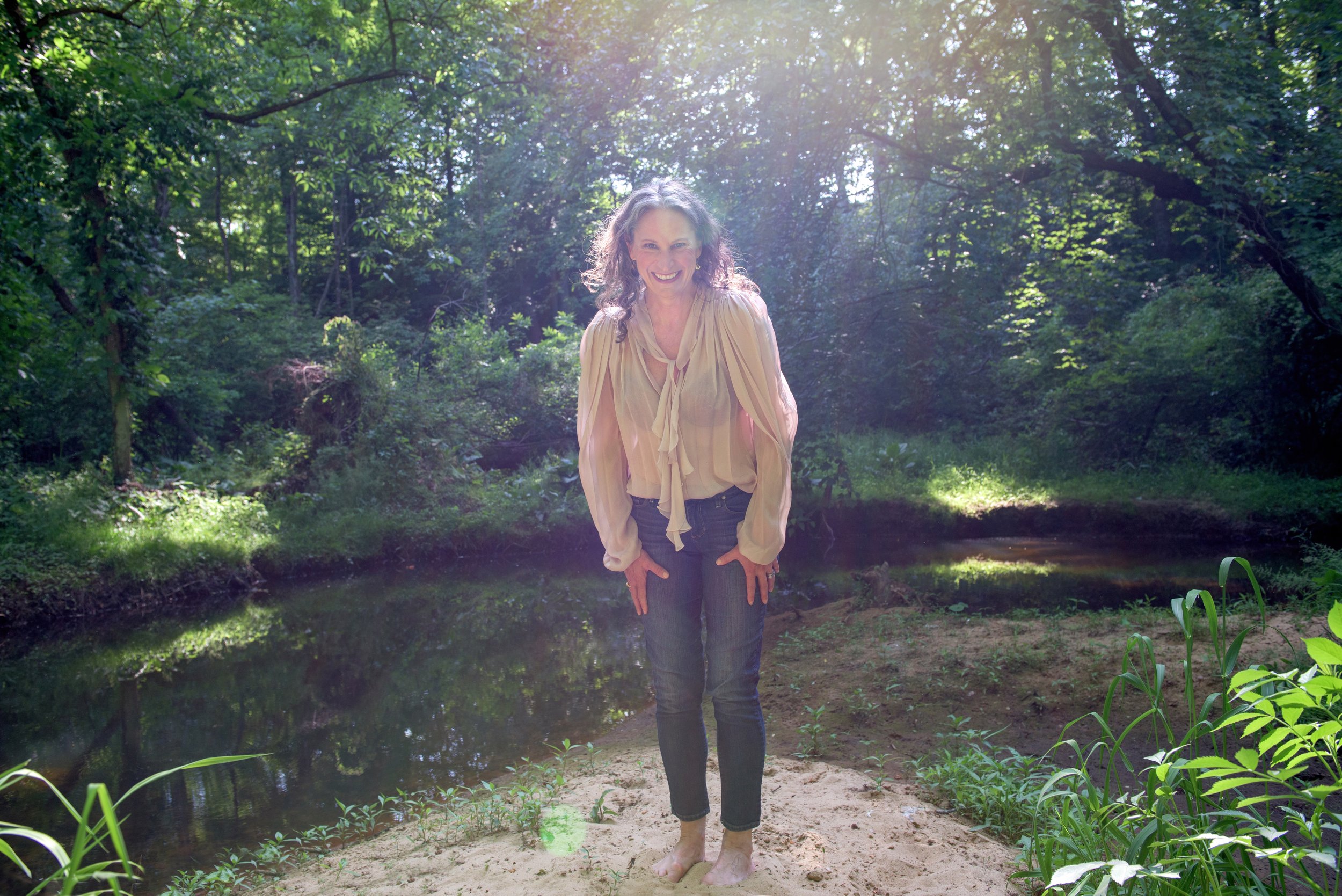
I started with politics
Not the kind where you run for office — I never wanted that. What I loved was the sparring, the research, the creative problem-solving, the satisfaction of knowing both sides of an argument well enough to dismantle either one. Debate team in high school. Political campaigns in my late teens. A political science degree that led, somewhat unexpectedly, to working for an Alaska Native woman elected to the Alaska State Legislature.
Her district was the size of France. Roughly 210,000 square miles, 10,000 people, and some of the most complex, underserved health challenges I have ever encountered: frontier rural access, tuberculosis, scope of practice battles that determined whether a community had any care at all. Health policy wasn't something I chose so much as something that chose me.
I followed it to Seattle, where I completed a Master of Health Administration at the University of Washington — a business complement to the policy foundation I'd been building. Then to Washington, DC, on a David A. Winston Health Policy Fellowship, where I landed on the House Committee on Ways and Means and spent nearly a decade working at what I can only describe as the center of the machine.
By 2007 I had reached the pinnacle of that career. The work was extraordinary. I loved it. But the long hours, the political stalemate, the particular exhaustion of caring deeply inside a system designed to move slowly took their toll. So I left. I went to work as CAO for my spouse's policy firm, which taught me something useful and swift: being capable of something is not the same as wanting to do it for the rest of your life.
It was around this time that I started asking a question I'd return to many times: if the economy collapsed tomorrow, what skill would I have to barter? Not cooking — I love to cook, but not as a job. Something else. Something that actually helped.
Then Peru happened
There are parts of this story I hold carefully, because they belong to traditions that are not mine to summarize on a website. What I can say is that a trip to Peru introduced me to ways of understanding the body, the self, and the relationship between them that I had no adequate language for at the time — and that I have been finding language for ever since. Those encounters opened something. They sent me home different.
Shortly after I returned, my acupuncturist felt called to introduce me to the Master of Science in Herbal Medicine program at Tai Sophia Institute in Maryland. I walked in and immediately knew: this is it. This is the thing.
What happened next is hard to describe without sounding like exactly the kind of person I am not. My interest in science and physiology ignited — genuinely, not as a requirement, but as a revelation. Alongside it, my understanding of the spiritual deepened. And somewhere in the overlap, the two stopped feeling like separate worlds. The material and the immaterial, the measurable and the intuited, the herb and the conversation — all of it the same thing, approached from different angles. Suddenly everything made sense in a way it hadn't before. I have been working from that integration ever since.
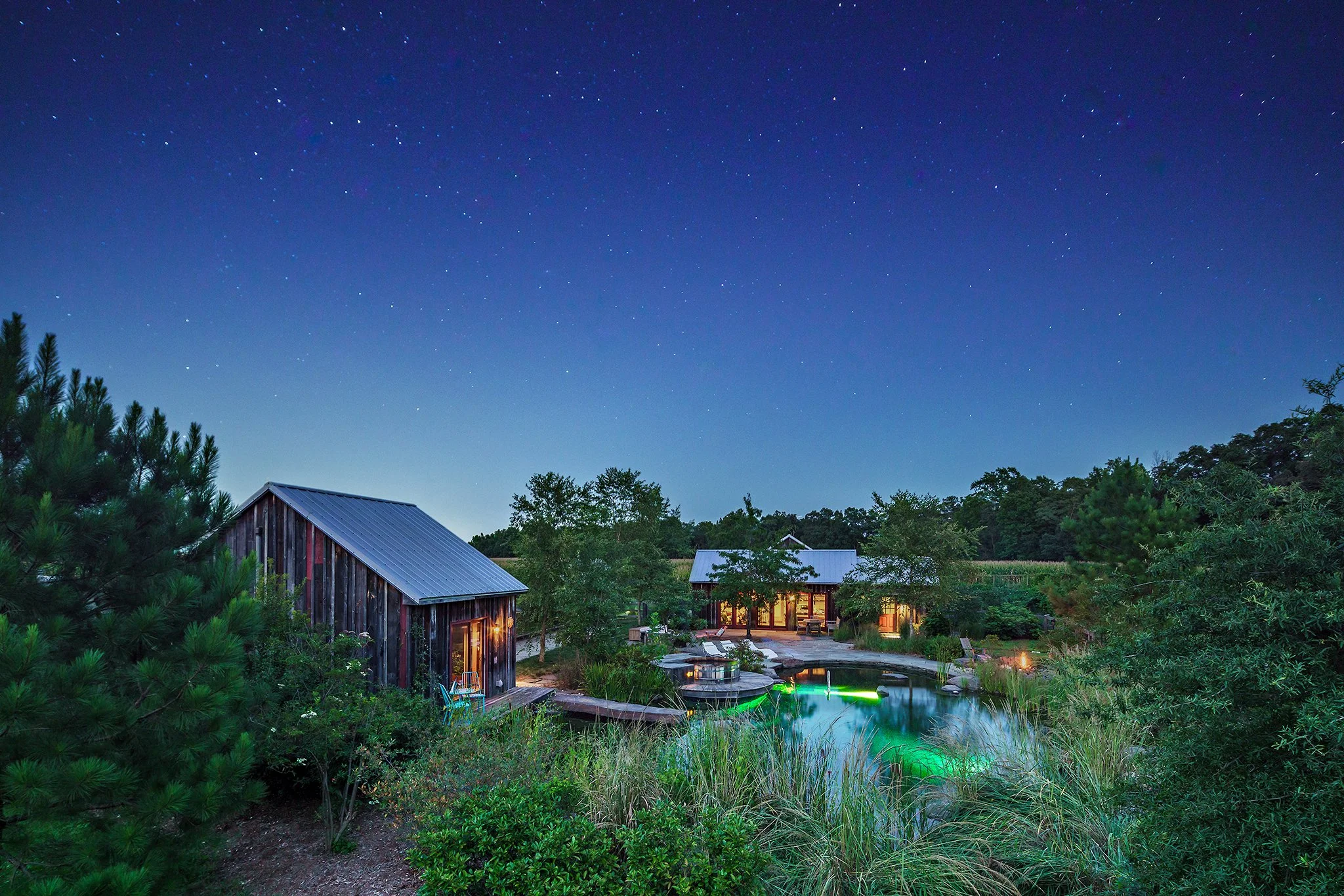
Presence as medicine
Tai Sophia was founded on a radical premise: that the practitioner's presence is the primary medicine. Herbs, needles, protocols — these are tools. They help nudge the body back toward its natural state of health. But what actually creates the conditions for healing is the quality of attention brought to the encounter.
I spent three years after graduation apprenticing with Bob Duggan — one of Tai Sophia's founders, and one of the most rigorous teachers I have known. What he taught me, at its core, was how to listen differently: to become aware of the narratives we carry, to separate what is actually happening (phenomena) from the stories layered over it (abstraction), to be present in a way that allows someone to hear themselves more clearly. Words are abstractions. The body is not. Learning to work at that boundary — between what is said and what is happening — changed how I practice in ways I am still discovering.
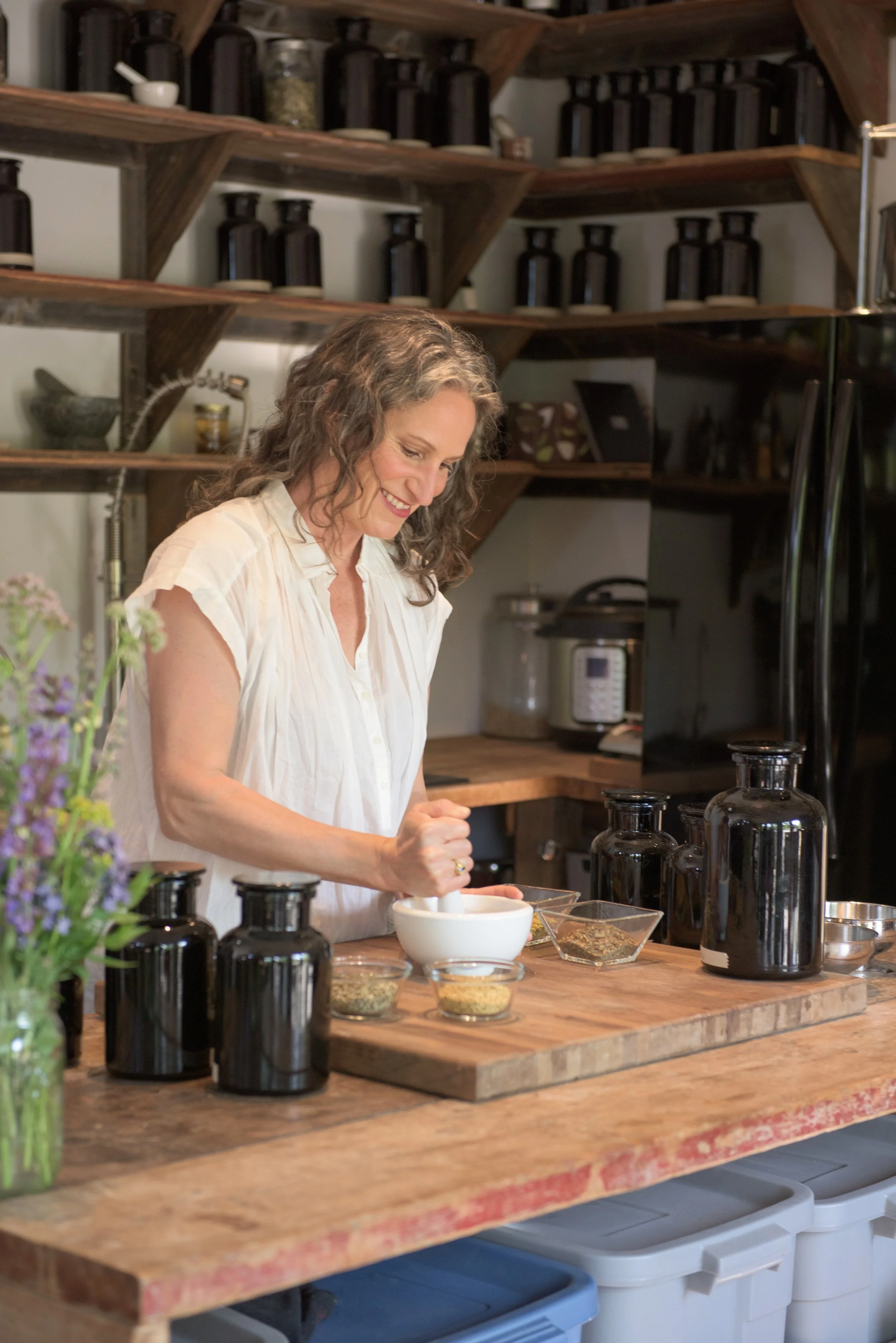
The farm and what it teaches
I live and work on a farm outside Chestertown, Maryland, on the Eastern Shore of the Chesapeake. Moving here was partly a return — I grew up in Alaska, and something in me had been quietly missing the particular quality of attention that comes from living close to the land. The farm gave it back.
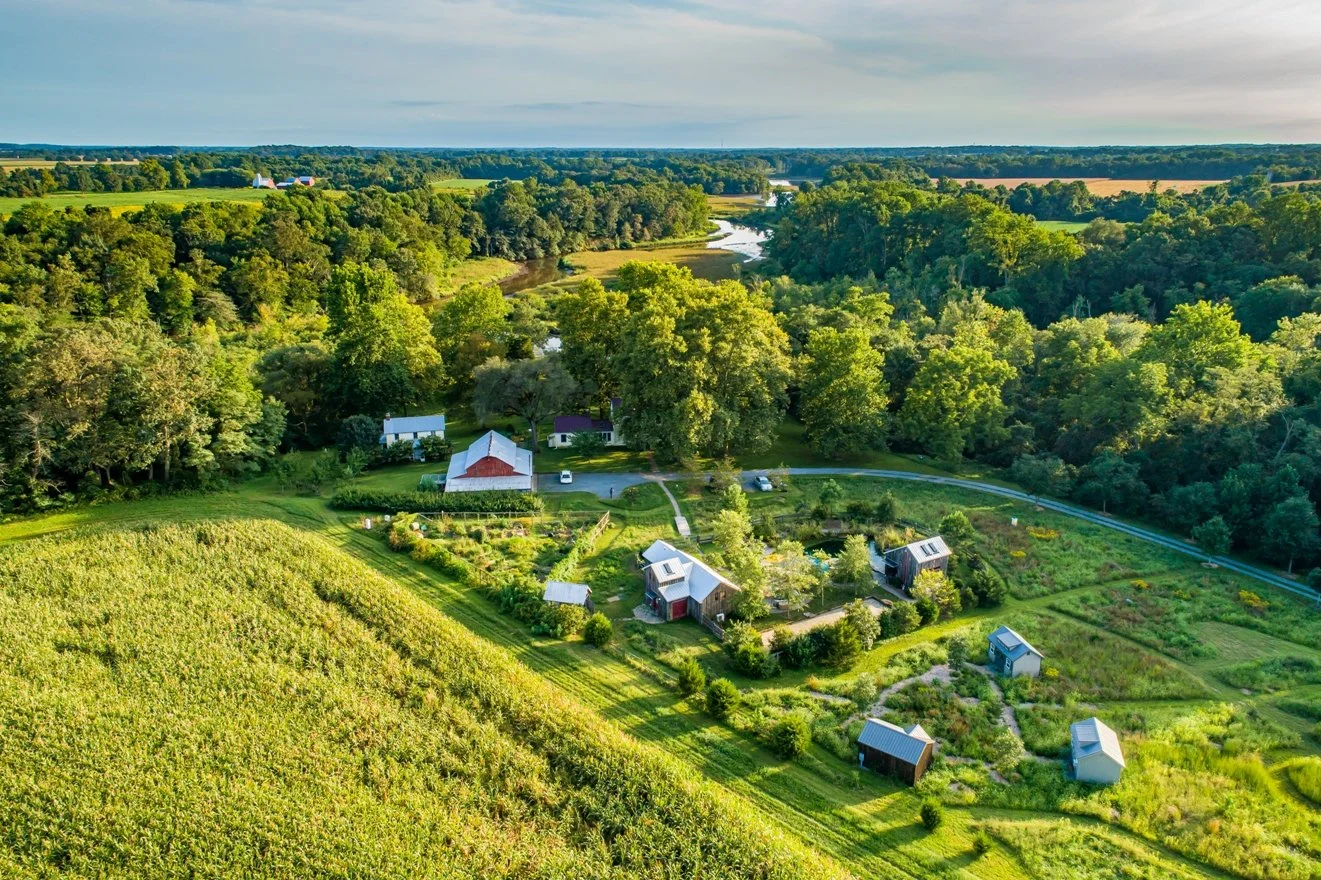
It has also been one of my most demanding teachers. Presence, patience, observation — not as concepts but as daily practice. You cannot rush a plant. You cannot argue with a season. You can only pay attention and respond to what's actually there. This is, not coincidentally, also how I practice medicine.
The farm is where I grow medicinal herbs, host seasonal retreats for a small spiritual community, and continue learning from the natural systems that have been teaching humans how to live well for longer than any of our institutions have existed.
On lineage and belonging
I have been shaped by teachers and traditions that are not all mine by birth, and I do my best to hold that carefully. I have a long personal history with Indigenous communities and ways of knowing — relationships that have marked me deeply and that I consider among the most significant of my life. I don't advertise these relationships, and I don't use them as credentials. I mention them here only because they are part of how I see, and because the right person will understand what that means without needing it explained.
What I can say plainly is this: I came to understand, through experience rather than study alone, that the body is not a machine, that symptoms are not malfunctions, and that healing is a relational process — between practitioner and patient, between person and season, between the life being lived and the body living it. These are old ideas. I did not invent them. I am grateful to the people and traditions that kept them alive long enough for me to find them.
Training and teachers
I am a Registered Herbalist with the American Herbalist Guild and a licensed nutritionist in the State of Maryland. I hold an MS in Herbal Medicine from Tai SOPHIA Institute (which sadly closed in 2013, the Western Herbal program being subsumed by the Maryland University of Integrative Health, which is now under the leadership of Notre Dame of Maryland University). But credentials are just the beginning of a story, not the end of one — and the teachers matter as much as the institutions.
While at Tai SOPHIA I studied with Simon Mills, an internationally recognized Herbalist practicing in the UK and Europe; James Duke, a formidable Botanist who spent his career traveling the globe identifying and studying plants and herbal medicines; Kevin Spelman, a Botanist, scientist and scholar who illuminated for me the quantum connections between humans and the natural world; James Snow, Professor, Herbalist who deftly navigates the terrain between science and tradition; Bevin Clare, Herbalist, author, world traveler with deep roots and an indefatigable spirit; and Camille Freeman, Physiologist, Herbalist, author and mentor with a rare gift making even the most complex concepts accessible. I was also introduced to and learned from many leaders in the field of Herbal Medicine, including Paul Strauss, David Winston and 7Song.
Bob Duggan and Dianne Connelly, the founders of Tai SOPHIA ensured our Western Herbal program was rooted in the Five Element Tradition in Chinese Medicine, and I have continued studying Five Element and the Shen Hammer Pulse tradition with the brilliant Tracy Soltesz. In 2020 I discovered the elegant and potent medicine of the Shang Han Lun under the generous tutelage of Sharon Weizenbaum, Herbalist, Acupuncturist and Chinese Scholar, and in 2026 I received certification in Classical Chinese Medicine through the White Pine Institute.
I spent years inside systems designed to help people and watched them fall short — not for lack of trying, but because the model was wrong. Too fast, too fragmented, too focused on the symptom and not the person.
I left to find a different way. I think I have found it. I'm still learning. We all are. Anyone who tells you otherwise is probably trying to sell something.
In-person in Chestertown, Maryland · Telehealth available.